
Fingerspelling is usually one of the first (and easiest) skills you learn in sign language (BSL). If you are about to start a BSL course, you can get a head start by downloading one of our BSL printable resources. You can download a right-hand version, left-hand version or both!
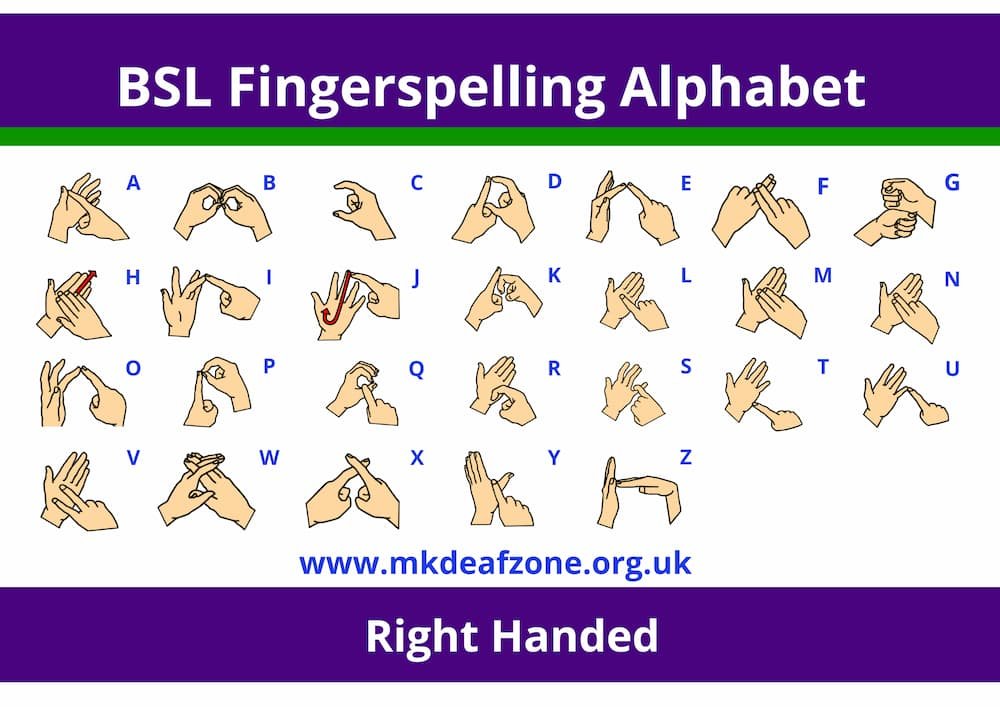
BSL fingerspelling chart – right hand PDF

BSL fingerspelling chart – left hand PDF
What is fingerspelling used for?
Fingerspelling is the representation of the alphabet on the hands. In BSL, it is used in a number of ways such as spelling people’s names or street names. It can also be used as a sign in BSL e.g. tapping out the letter ‘M’ twice means ‘mother’.
Practise fingerspelling regularly
Learning to fingerspell is really easy. If you practise every day, you can become fluent in a very short time. When you learn sign language, you practise fingerspelling regularly. We encourage you to practise for at least 5 minutes every day so you can develop your muscle memory.
The History
Fingerspelling has been used for hundreds of years. It is thought to have been used initially in medieval times by monks who swore an oath of silence. Instead of speech, they used fingerspelling to communicate.
In modern times, fingerspelling is part of BSL and is used by BSL users and some Deafblind individuals. The Deafblind fingerspelling is a tactical version that creates shapes on the hand:
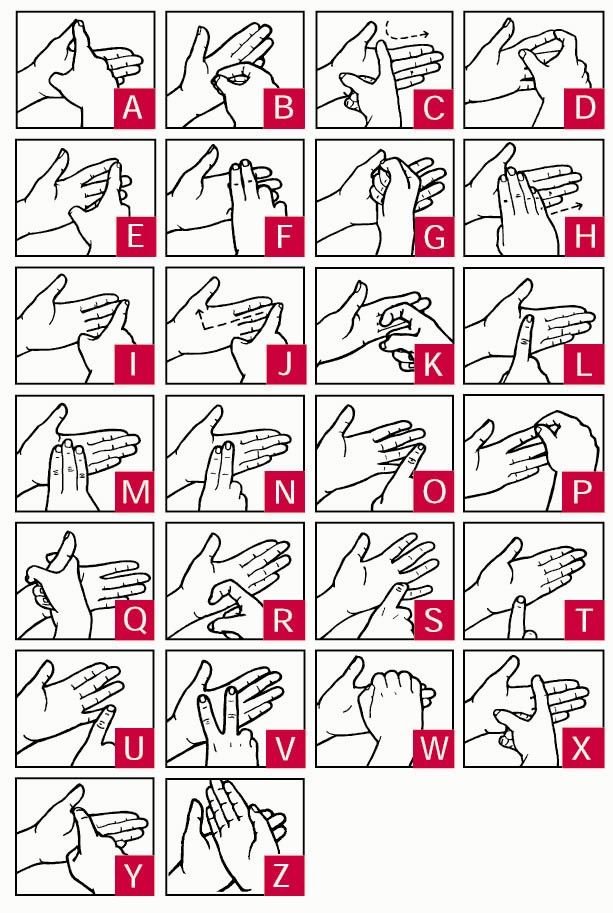
Image credit: deafblind.org.uk
Is fingerspelling used around the world?
All signed languages have fingerspelling. However, it will be performed differently in different parts of the world. For example, American Sign Language (ASL) uses one hand for the alphabet.
If you are interested in learning British Sign Language, you can find BSL courses on the Signature website. Signature also has a range of resources (some are free) to help you learn and practise BSL.